Go-home preparation
What Your Rhodesian Ridgeback Puppy Receives Before Leaving
A transparent look at the health record, paperwork, feeding guidance, routine foundations and breeder support that should accompany your puppy.

A clearer decision
What this guide helps you evaluate
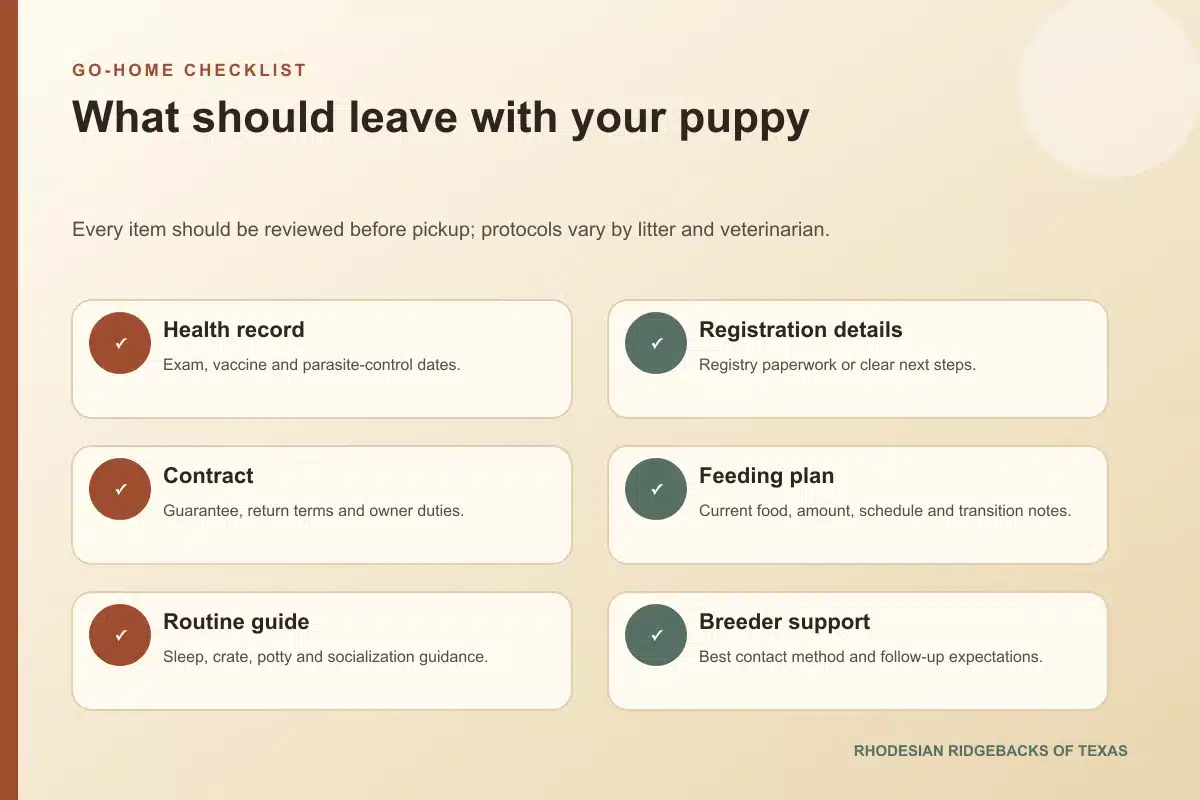
A smooth transition begins with complete records and realistic guidance. A puppy should not leave with only a bag of food and a promise to “call if you need anything.” New owners need to understand what has already been done, what is due next and how to preserve the puppy’s routine during the first days at home.
1. A litter-specific health record
The record should identify the puppy and list veterinary examinations, vaccinations, parasite-control dates and any findings that require follow-up. Dates matter more than vague phrases such as “up to date,” because your veterinarian will use them to plan the remaining puppy series.
We encourage owners to schedule a new-puppy examination promptly and bring every record. The receiving veterinarian should decide the continuing vaccine, parasite-prevention and nutrition plan based on the puppy’s age, history, travel and local risk.
2. Registration and pedigree information
Purebred registration identifies lineage; it does not by itself certify health or temperament. The go-home packet should explain which registry paperwork applies, whether registration is limited or full, and what the owner must complete. Registered names and numbers also make it easier to verify parent health testing.
3. The written purchase agreement
Read the agreement before pickup day. It should address payment, registration, health provisions, owner responsibilities, breeding restrictions when applicable, and what happens if the owner can no longer keep the dog. Verbal statements should not conflict with the written terms.
4. A feeding and transition plan
Sudden food changes can add digestive stress during an already significant transition. Owners should receive the current food name, meal amount, frequency and a short transition strategy if they plan to change diets. Treat portions matter too, especially during the first week of intensive training.
5. Current routine and training foundations
Useful notes include the puppy’s sleep pattern, elimination schedule, crate exposure, preferred reinforcement and experience with grooming, car rides and household sounds. These are foundations, not finished behaviors. Regression during the first nights is normal; consistency and calm management matter.
6. Familiar scent and safe travel preparation
A small blanket or other safe familiar-scent item can make the transition easier. Families should arrive with an appropriately sized secured crate or restraint system, water for longer trips, cleanup supplies and a plan for low-risk breaks.
7. Identification and microchip status
Do not assume. Confirm in writing whether the puppy is microchipped, whether registration has been initiated, and which contact information must be updated. If a chip is not yet placed, discuss timing with your veterinarian. A collar tag and microchip serve different purposes; both depend on current contact details.
8. Ongoing breeder support
Responsible placement continues after pickup. Owners should know the best method for routine questions, what constitutes an urgent veterinary issue, and when the breeder wants updates. We keep in touch with many puppy families and provide ongoing guidance on the transition, routine, training and breed-specific questions.
| Before leaving | Owner’s next step |
|---|---|
| Review every health date | Book the new-puppy veterinary exam |
| Read and sign the agreement | Store a digital and paper copy |
| Confirm food and schedule | Avoid an abrupt diet change |
| Confirm registration/chip steps | Complete transfers and update contacts |
| Secure travel setup | Plan safe, low-exposure breaks |
What a go-home package cannot guarantee
No breeder, veterinarian, vaccine or genetic test can guarantee that a living animal will never become ill. A credible program explains what was screened, what care the puppy received, which risks remain and what the written agreement covers. Health transparency is stronger than absolute language.
Ready to take the next step?
Review the current litter and tell us about your household, experience and goals.
Frequently asked questions
Will my puppy be fully vaccinated?
Young puppies normally require a series completed after they go home. The record should show what was given and when; your veterinarian plans the rest.
Do all litters receive exactly the same protocol?
No. Age, veterinarian recommendations, travel and individual findings can change timing. Confirm the current litter’s written record.
What if I cannot keep my Ridgeback later?
Contact the breeder before rehoming. The purchase agreement should explain return or placement expectations. Our public policy states that we will take back a puppy or dog; the signed agreement controls the details.
Next: review our application, deposit and matching process.
Thoughtful placement starts with a conversation
Tell us what kind of Ridgeback home you can provide.
Share your household, schedule, experience and goals so we can discuss timing and fit honestly.
Availability, dates and individual puppy details can change. Confirm current information directly before making plans.