Rhodesian Ridgeback Puppy Socialization Timeline: Birth to 16 Weeks
Development roadmap
Rhodesian Ridgeback Puppy Socialization Timeline
A practical birth-to-16-week roadmap built around safe exposure, positive recovery, adequate rest and developmentally appropriate expectations.
A clearer decision
What this guide helps you evaluate
The most important socialization period begins with the breeder and continues through the puppy’s first months at home. The American Veterinary Society of Animal Behavior identifies the first three months as the primary window and supports safe socialization before the vaccination series is complete. That does not mean placing a young puppy on the floor of a high-traffic dog area. It means balancing behavioral development with veterinary disease-prevention guidance.
0–2 weeks: neonatal stability
Newborn puppies depend on their mother and breeder for warmth, nutrition, elimination and safety. Appropriate handling is brief and gentle. The priorities are maternal care, daily monitoring, clean bedding and uninterrupted sleep—not novelty for its own sake.
2–4 weeks: senses and mobility emerge
Eyes and ears open, movement becomes more coordinated and puppies begin interacting with littermates and people. Low-intensity experiences may include different safe bedding textures, quiet household sounds and calm one-at-a-time handling. Puppies should always be able to return to warmth and rest.
4–6 weeks: curiosity and social learning
Puppies become more mobile and exploratory. A thoughtful program introduces age-appropriate household life: people of different appearances, stable adult dogs when appropriate, mild sounds, novel objects, short individual sessions and varied footing. The breeder observes which puppies investigate quickly, which pause, and how each recovers.
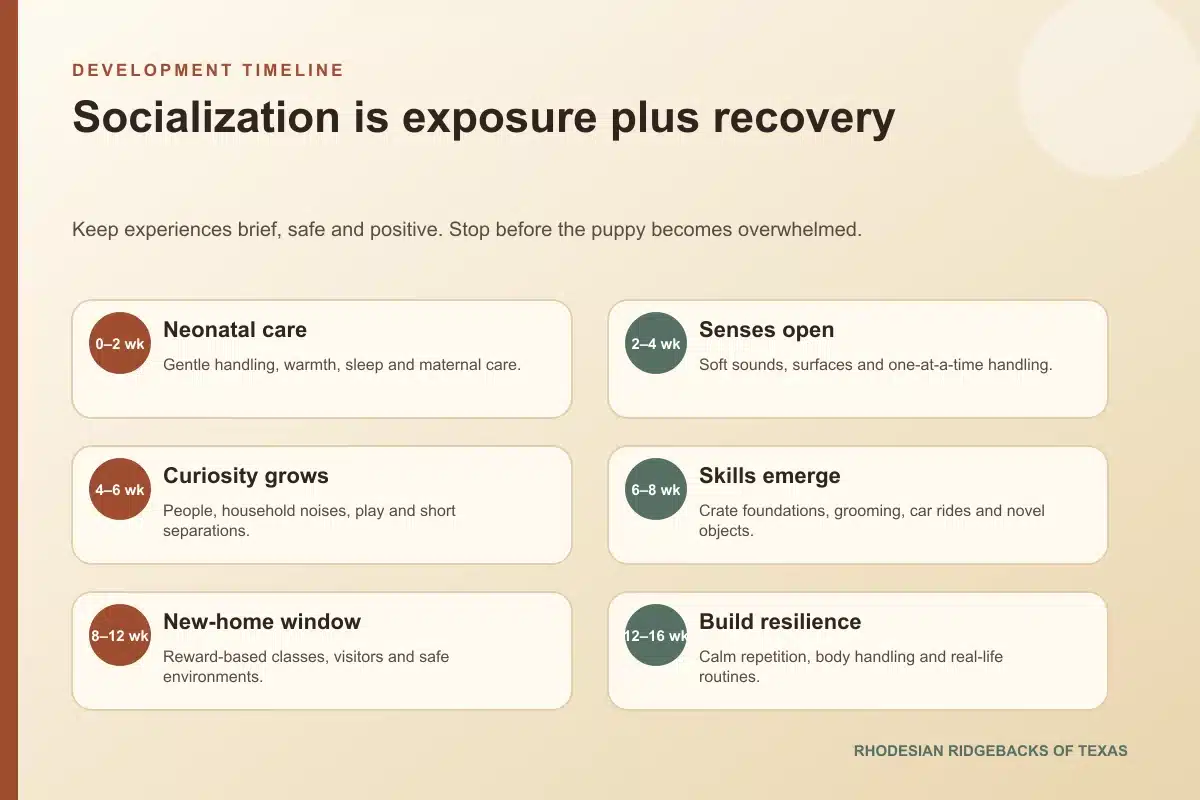
6–8 weeks: foundations for the transition home
This period can include positive crate exposure, very short separations from littermates, grooming and nail-care practice, vehicle rides, individual feeding, recall games and calm body handling. Sessions should be short. A tired or worried puppy needs sleep or distance, not pressure.
8–12 weeks: the new-home socialization window
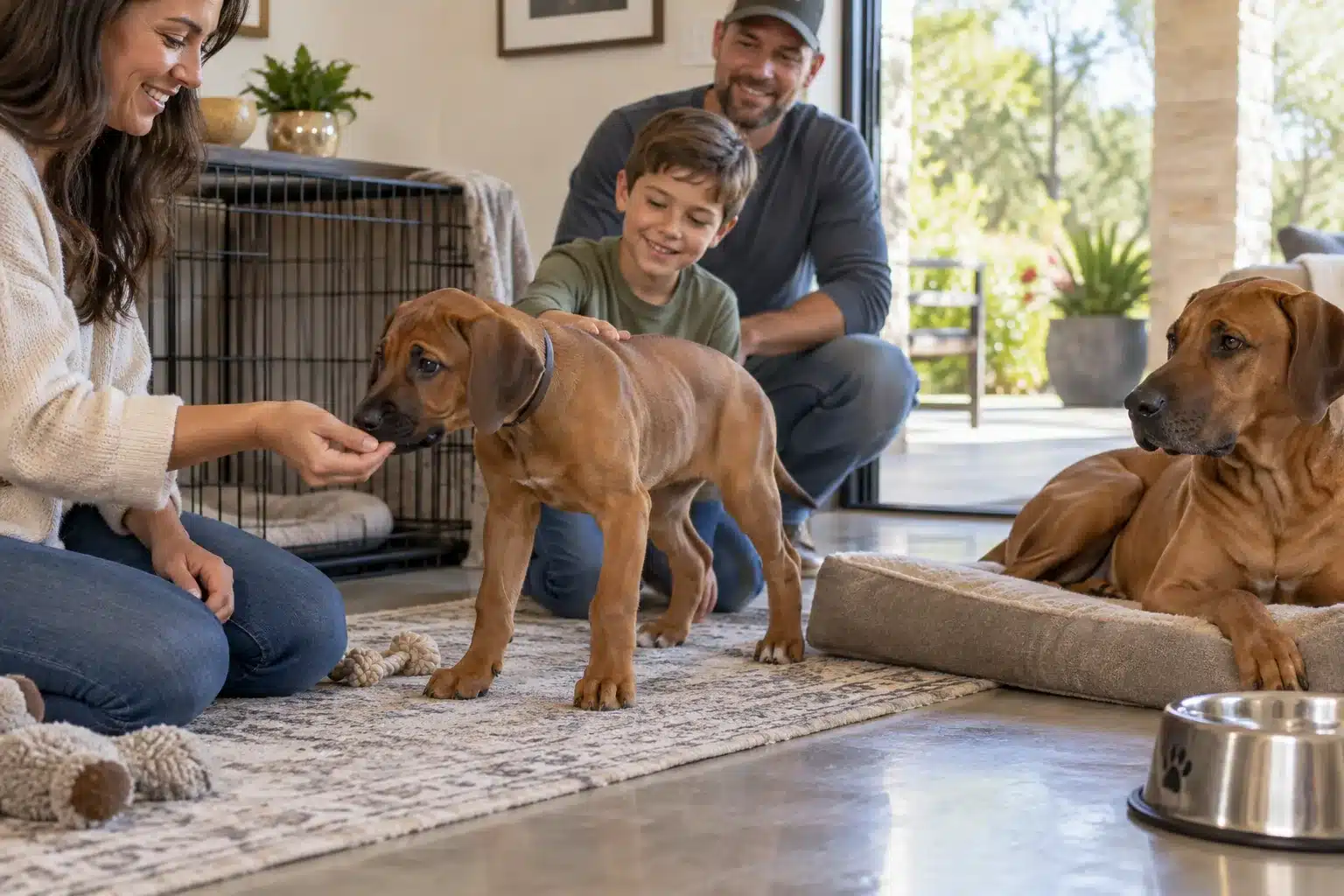
The owner now becomes the puppy’s primary teacher. Work with your veterinarian on local disease risk and vaccination timing. AVSAB states that puppy classes can begin as early as 7–8 weeks when the puppy has received at least one vaccine set at least seven days before class and a first deworming, with vaccines kept current throughout class.
Useful low-risk experiences include:
- Carrying the puppy through busy places rather than using contaminated ground
- Meeting calm, healthy, appropriately vaccinated dogs known to you
- Reward-based puppy class with sanitation and vaccine requirements
- Visitors wearing hats, uniforms, glasses or using mobility aids
- Household appliances, doorbells, traffic and recorded sounds at low intensity
- Veterinary-style handling paired with food: ears, feet, mouth and gentle restraint
12–16 weeks: build fluency, not intensity
Continue positive exposures as natural caution may increase. Repeat easy versions of skills in different places. Teach leash walking, settling on a mat, recall, trading objects, cooperative handling and calm observation. Avoid flooding—the practice of forcing a puppy to remain near something frightening until it stops reacting.
How to read your puppy’s response
| Zone | What you may see | What to do |
|---|---|---|
| Comfortable | Loose body, curiosity, takes food, can disengage | Reward, keep it brief, end successfully |
| Uncertain | Pauses, leans away, lowered posture, slower eating | Increase distance and lower intensity |
| Overwhelmed | Freezes, hides, struggles, refuses food, frantic escape | Stop; provide safety and recovery |
Socialization is not the same as social access
A Ridgeback does not need to greet every person or dog. Calm neutrality is often the most practical goal for a large, reserved hound. Allowing choice helps prevent forced interactions from becoming conflict. A puppy can learn that bicycles, children, livestock and strangers are safe without physically contacting them.
What to avoid
- Dog parks and high-traffic pet relief areas for incompletely vaccinated puppies
- Overwhelming festivals, crowded stores or uncontrolled dog greetings
- Punishing fear, barking or reluctance
- Letting children chase, carry or corner the puppy
- Skipping sleep; young puppies need substantial rest
Ready to take the next step?
Review the current litter and tell us about your household, experience and goals.
Frequently asked questions
Should I wait until all vaccines are finished?
Behavior specialists advise against losing the entire early window. Use your veterinarian’s local risk guidance and choose controlled environments rather than unfiltered exposure.
How many new experiences should we do each day?
There is no magic number. One easy, positive experience with full recovery is better than ten overwhelming ones.
Can an older puppy still be socialized?
Yes, learning continues throughout life. The early period is unusually influential, but careful desensitization and counterconditioning can improve later responses.
This guide complements—not replaces—individual veterinary advice.
Thoughtful placement starts with a conversation
Tell us what kind of Ridgeback home you can provide.
Share your household, schedule, experience and goals so we can discuss timing and fit honestly.
Availability, dates and individual puppy details can change. Confirm current information directly before making plans.