Our breeding program
Our Rhodesian Ridgeback Breeding Philosophy and Credentials
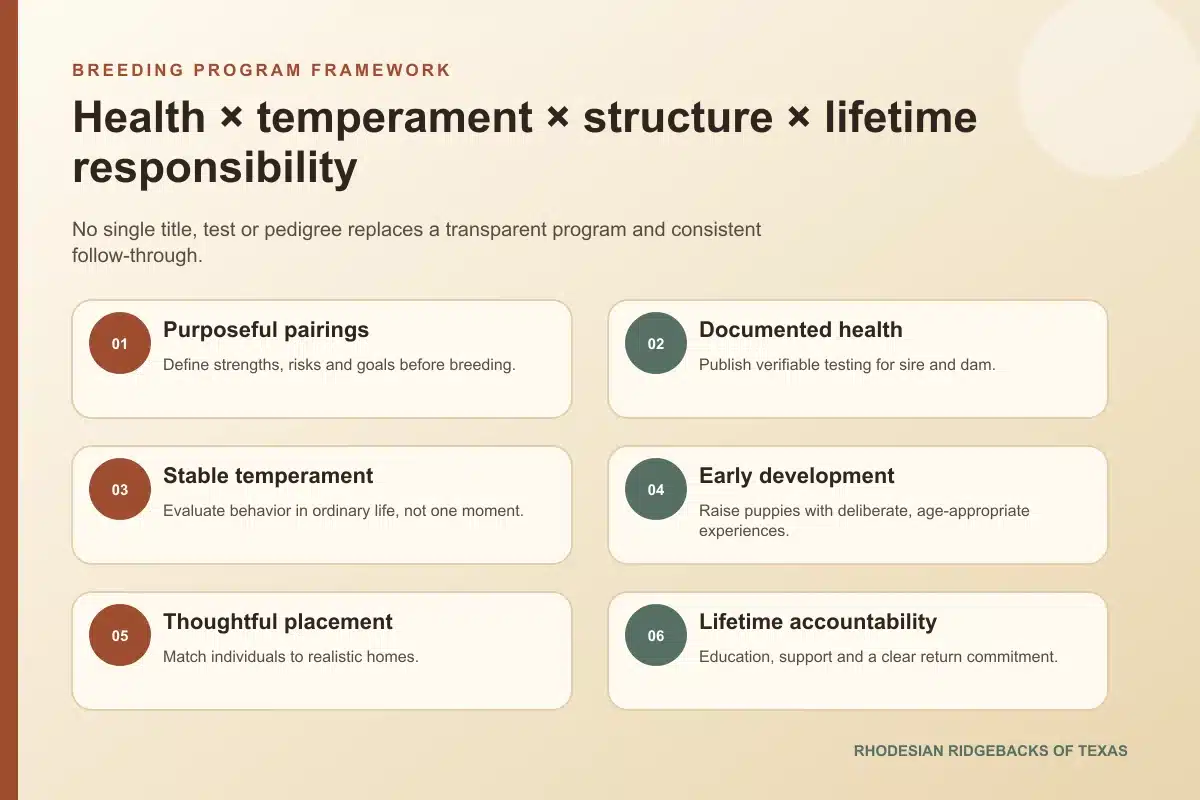
Health, stable temperament, functional structure, thoughtful development and lifetime responsibility guide every breeding and placement decision.
A clearer decision
What this guide helps you evaluate
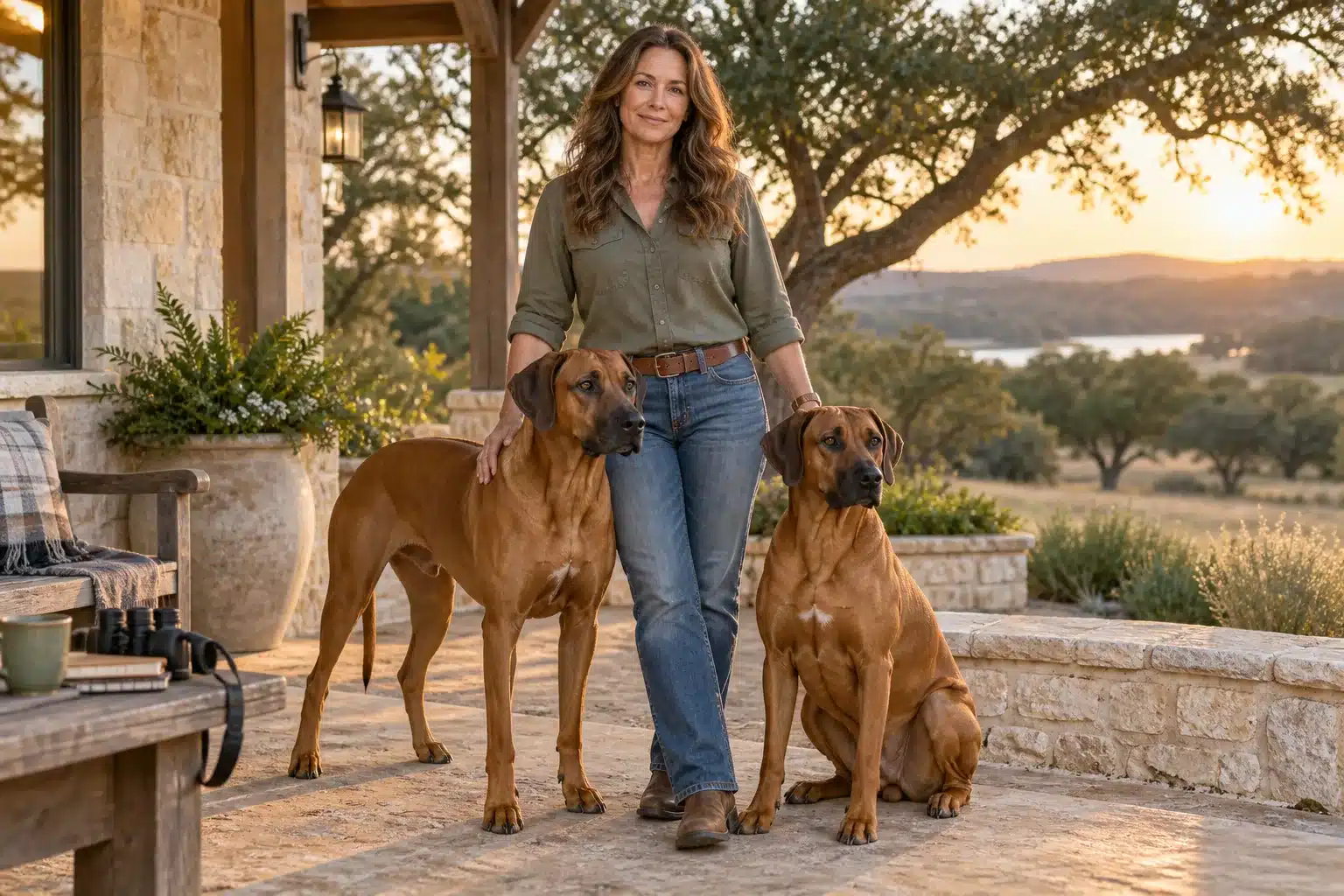
Rhodesian Ridgebacks of Texas is a family-focused breeding program in Fredericksburg, Texas. Our public site reflects more than 15 years of experience with the breed and a long-term commitment to the families who take our puppies home. This page explains how we make decisions and which documents buyers should evaluate.
Purposeful pairings
A breeding should have a defined purpose beyond producing puppies. The proposed sire and dam are considered as individuals and as a combination: pedigree, health information, temperament, structure, age, prior offspring when available and known family history. No dog is perfect. Ethical planning requires identifying strengths and risks before a pairing—not explaining them after a problem appears.
Documented health screening
We support independent verification of health records. The Rhodesian Ridgeback Club of the United States identifies hip and elbow screening and strongly recommended CHIC-related screenings including thyroid, cardiac and eye evaluation. Testing reduces risk and improves decision-making, but it does not guarantee a disease-free puppy.
Our published profile for Maverik Barret Avery lists AKC registration HP50678111 and OFA hip and elbow information. Buyers should search the registered identity directly and ask for both proposed parents’ current records. Our OFA verification guide explains how.
Temperament in ordinary life
The breed standard describes an even, dignified dog devoted to its owner and reserved with strangers. We value Ridgebacks that can live successfully with their families—not merely dogs that look impressive in a photograph. Parent behavior, breeder observations, early development and appropriate matching all matter.
Temperament is not reduced to “friendly” or “protective.” We consider recovery after novelty, ability to settle, human engagement, environmental confidence, handling comfort and social behavior. Early puppy observations inform placement but cannot guarantee the adult outcome; owners continue the work through socialization, training and management.
Functional structure and breed type
A Rhodesian Ridgeback should be athletic, balanced and capable of efficient movement. Structure is evaluated in relation to the breed standard and long-term function, not exaggerated size. Bigger is not automatically better. Nutrition, growth rate and age-appropriate exercise also affect developing joints and conditioning.
Age-appropriate puppy development
Before puppies leave, daily care should support physical health and behavioral resilience: maternal care, clean housing, gentle handling, safe novelty, household exposure, individual attention, rest, early crate foundations and veterinary oversight. Socialization should remain below the puppy’s fear threshold. Our socialization timeline explains the stages.
Thoughtful placement
We want families to understand the breed before committing. Ridgebacks are large, athletic hounds with independence, prey drive and a need for secure management. Applications and conversations help identify realistic matches. Sex and color preferences are considered, but the puppy’s observed behavior and household fit should guide the final decision.
Lifetime responsibility
Our public policy states that we will take back a puppy or dog. The current signed agreement defines the process and responsibilities. We also remain available for ongoing questions and maintain connections with many puppy families. Responsible breeding includes accountability when an owner’s circumstances change.
Credentials and evidence buyers can verify
| Evidence | What it tells you | What it does not prove alone |
|---|---|---|
| AKC registration | Recorded purebred lineage | Health, temperament or breeder quality |
| OFA/CHIC records | Documented screening results | A guarantee of future health |
| Pedigree/titles | Ancestry and evaluated accomplishments | The quality of every descendant |
| Written contract | Specific obligations and remedies | That every verbal claim is included |
| Years of experience | Time with the breed and past placements | Current best practices without documentation |
Questions we welcome
- Why was this sire chosen for this dam?
- Where can I verify both parents’ health results?
- What health or temperament concerns exist in the family?
- How are puppies raised and observed?
- How does matching work?
- What happens if I cannot keep the dog?
Ready to take the next step?
Review the current litter and tell us about your household, experience and goals.
Frequently asked questions
Are AKC breeders “certified” by the AKC?
AKC registration is not a blanket certification of breeder quality. Evaluate health records, contracts, conditions, parent temperament, placement practices and support.
Do champion bloodlines guarantee a superior puppy?
No. Titles provide useful information about ancestors, but the proposed parents and the individual puppy still require direct evaluation.
Why publish limitations?
Because health, temperament and availability are not absolutes. Clear limitations help families make informed decisions and strengthen trust.
Start with our health testing checklist, review the current litter page, or contact us with questions.
Thoughtful placement starts with a conversation
Tell us what kind of Ridgeback home you can provide.
Share your household, schedule, experience and goals so we can discuss timing and fit honestly.
Availability, dates and individual puppy details can change. Confirm current information directly before making plans.